Mobile Street Furniture
(Transforming traffic infrastructure into modular spaces for collective urban use)- Place
- Hamburg, Germany
- Client
- Altstadt für Alle e.V., Hamburg Center District Office
- Type
- Design-build intervention / Modular street furniture system
- Practice Focus
- Collaborative urban transformation and co-creative public space production
- Materials
- Timber construction, steel components, wheels, transplanted trees, modular seating elements
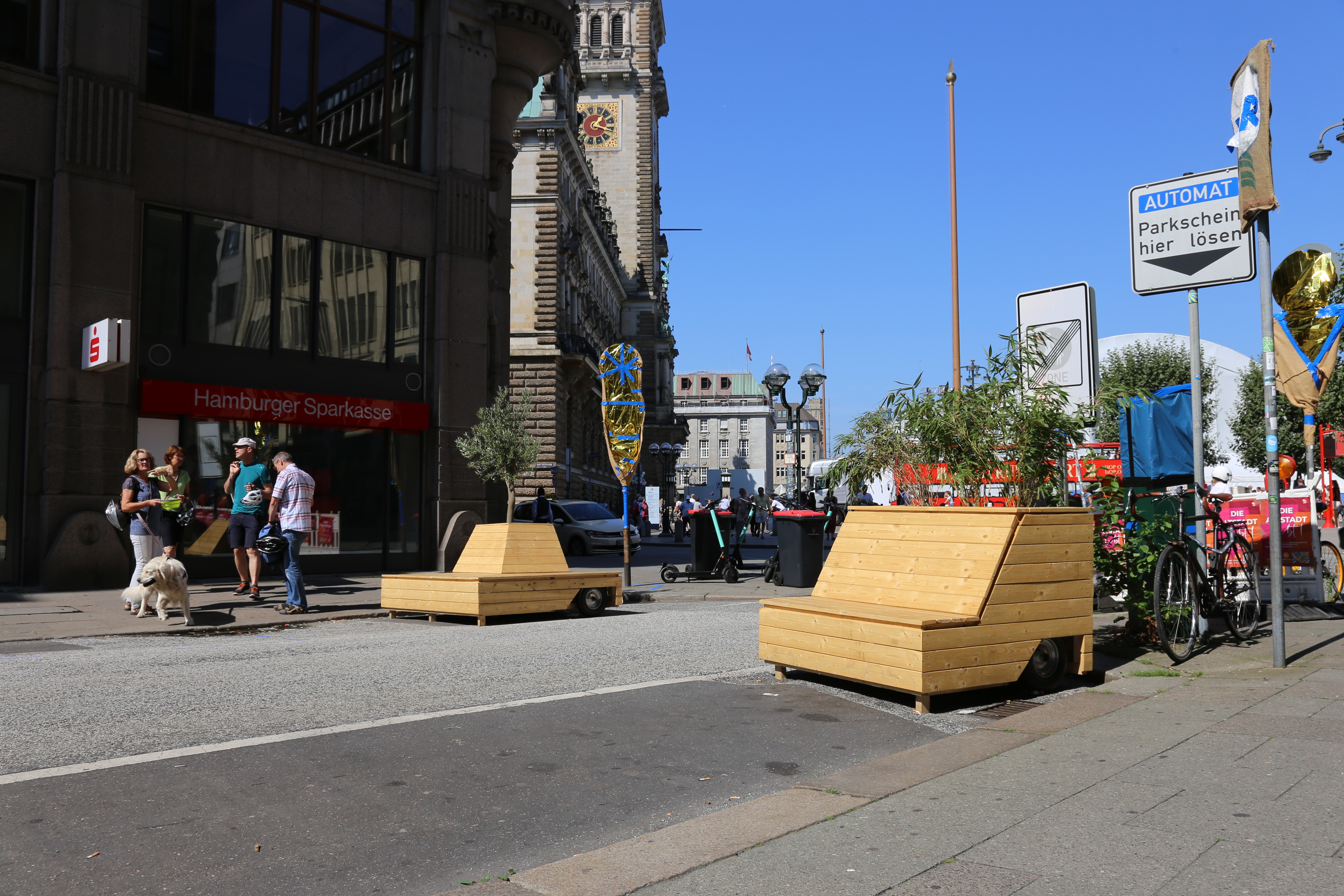
The Mobile Street Furniture project was developed as part of a temporary car-free zone in Hamburg’s Rathausquartier, initiated by the civic initiative Altstadt für Alle. The three-month test phase explored how urban space could be reimagined once parking lanes and traffic were removed, expanding the pedestrian area by more than eight metres and opening new possibilities for public use.
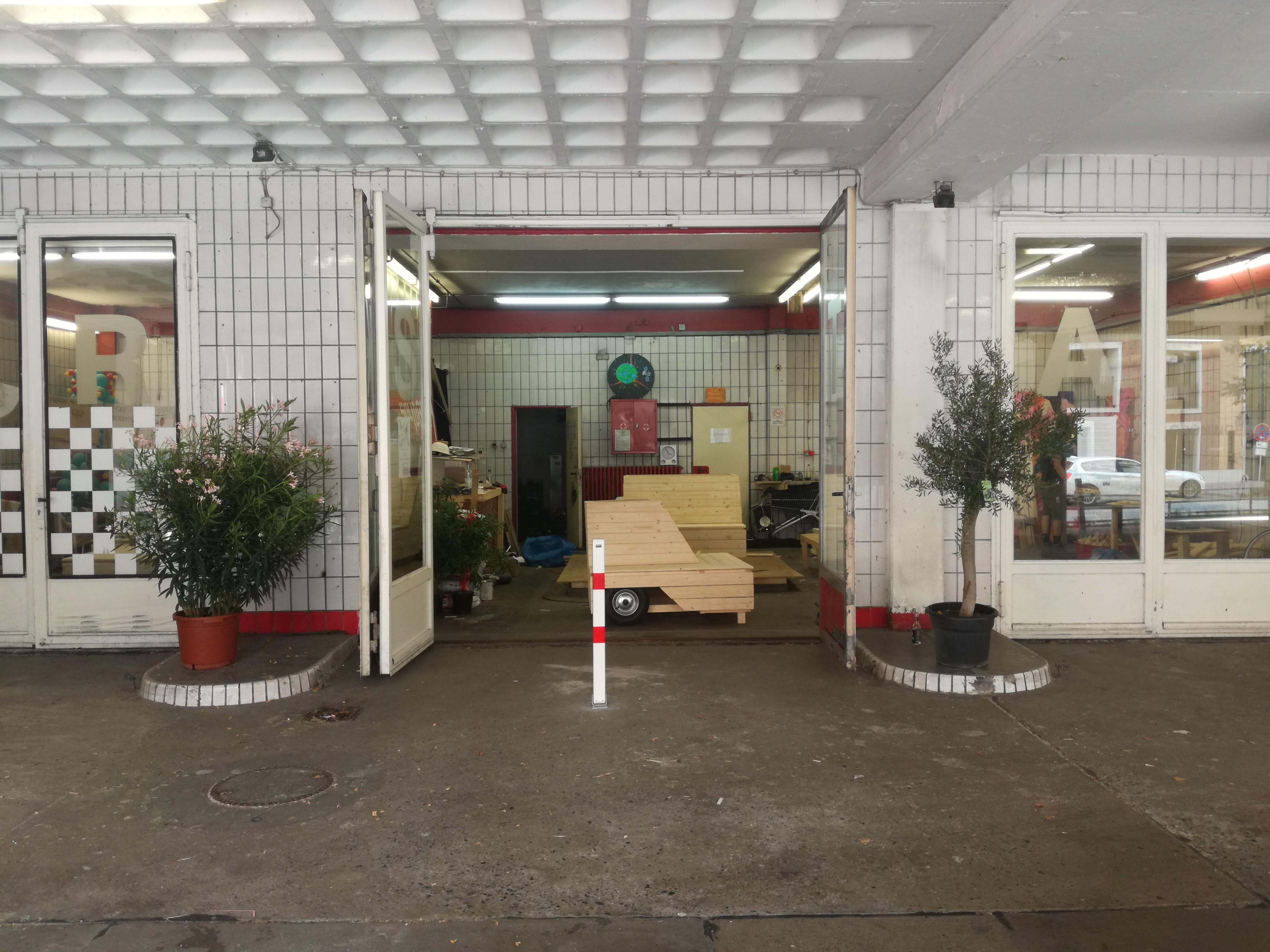
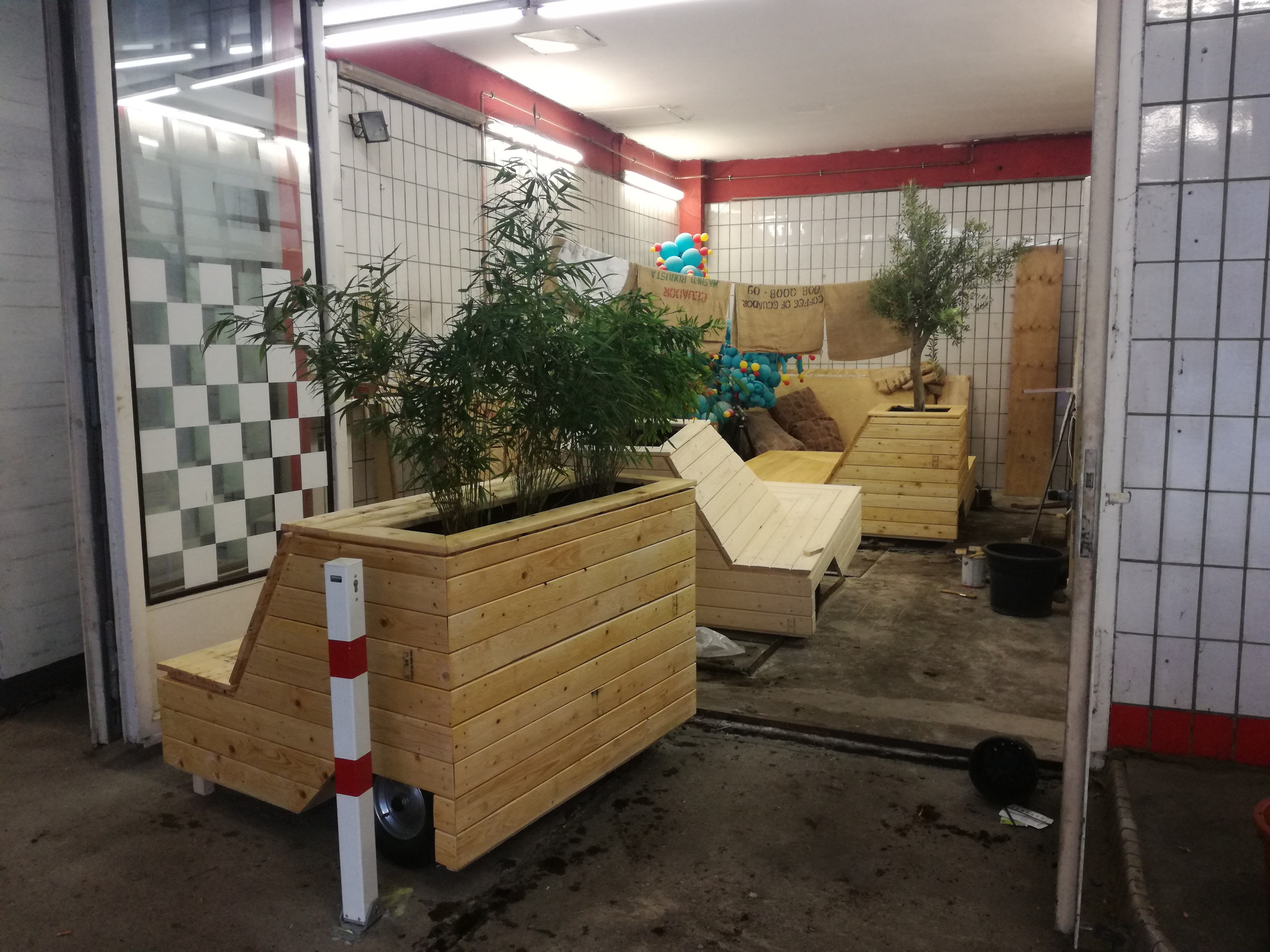
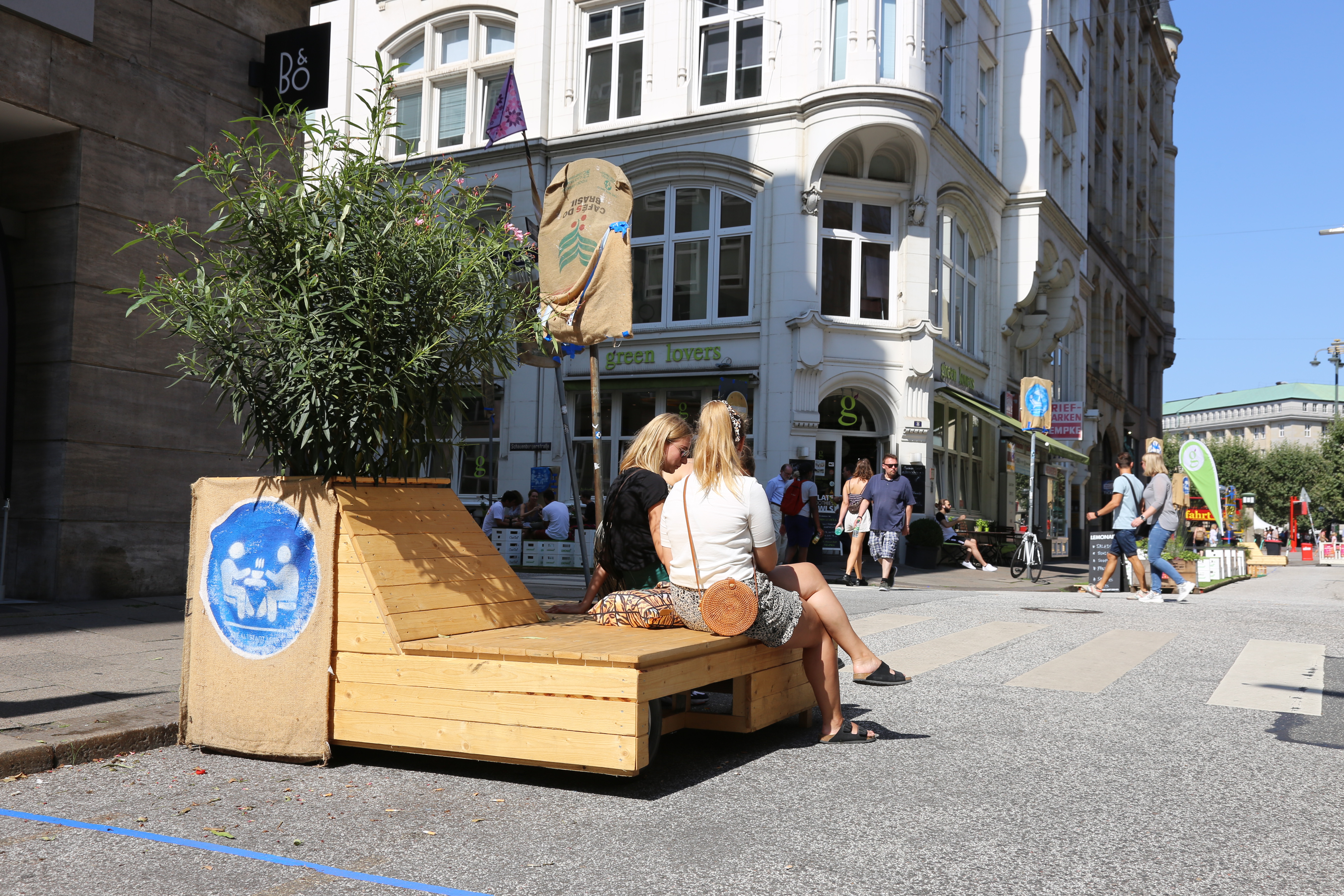
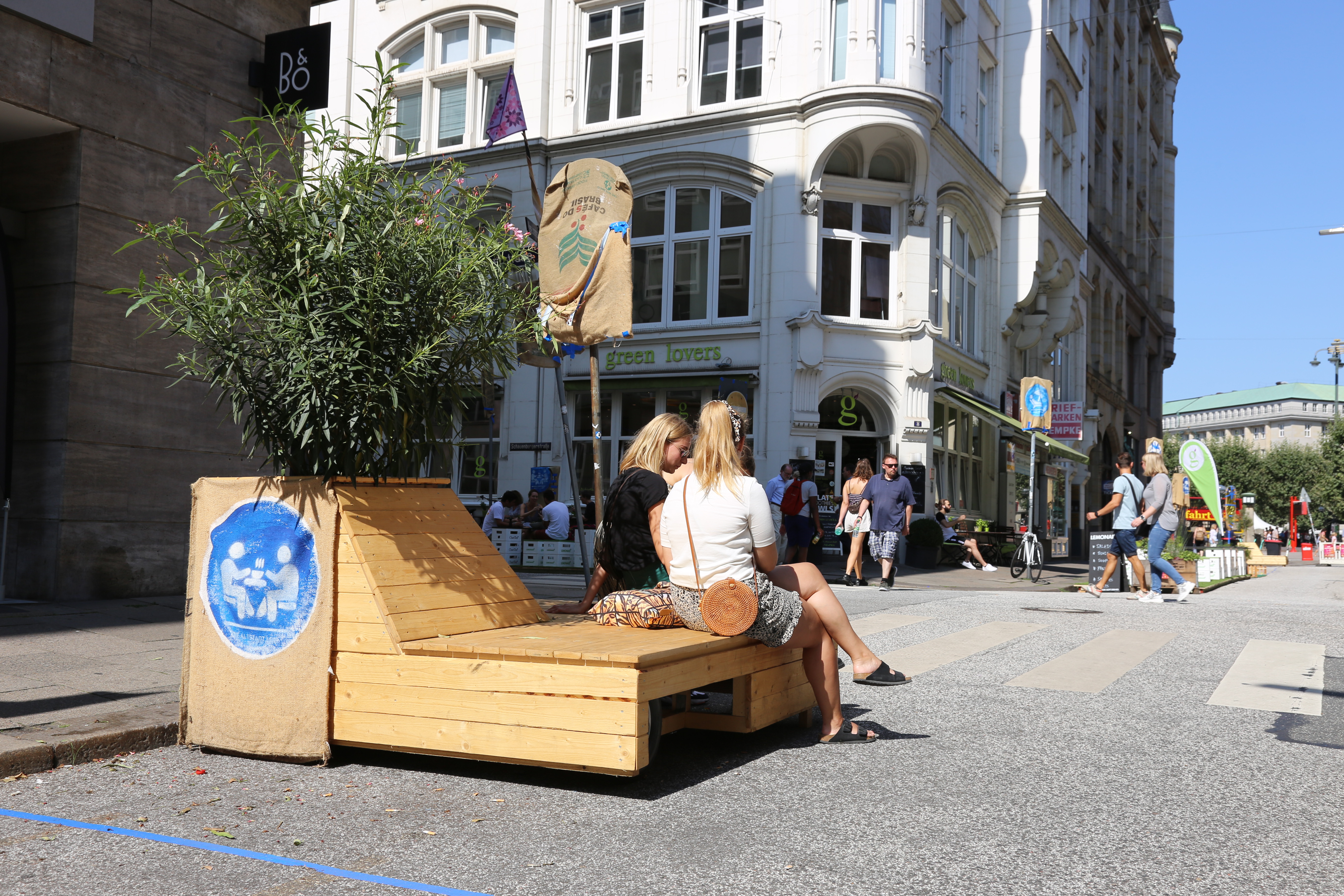
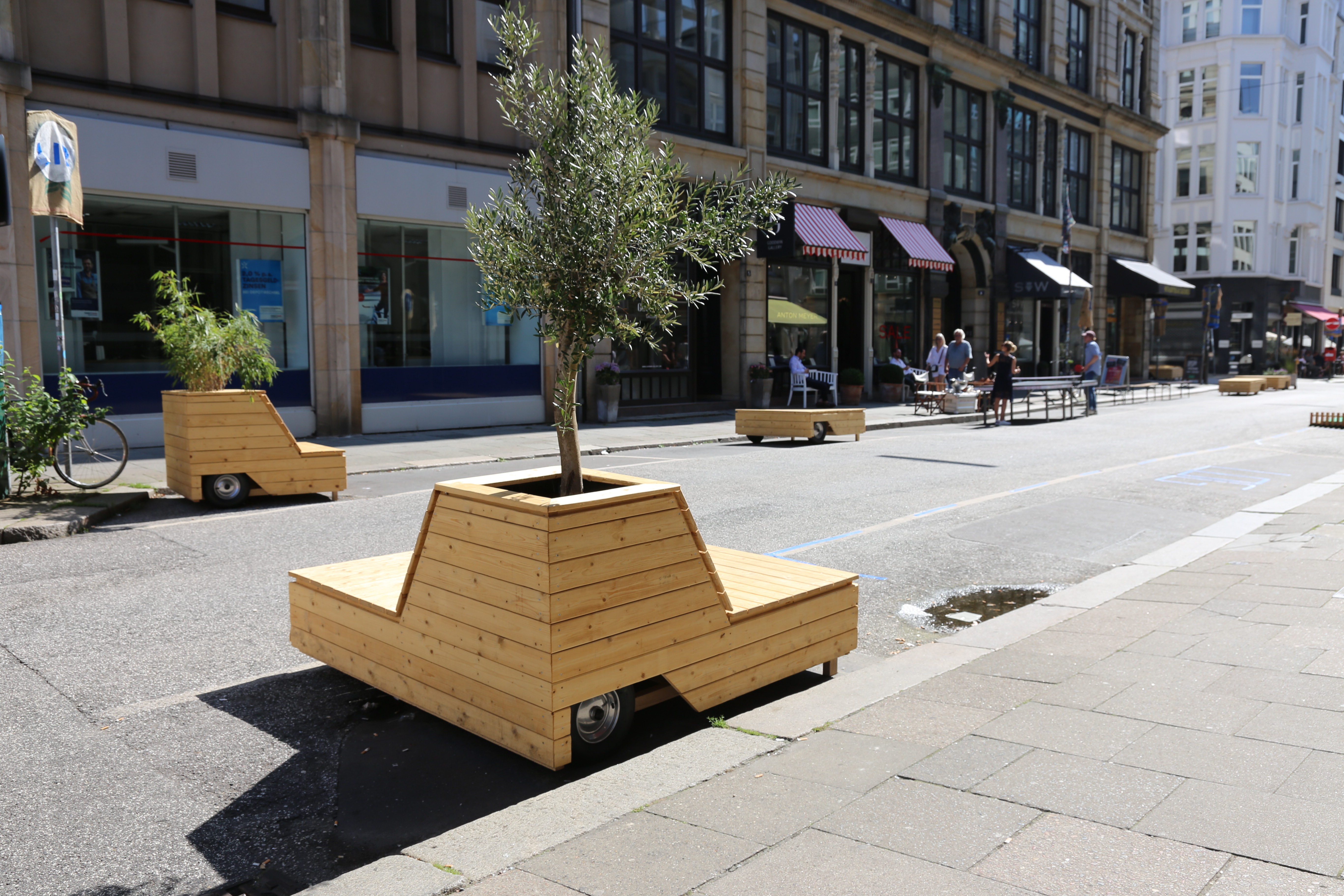
Javi Acevedo was commissioned to design and build a modular system of street furniture that could support diverse activities throughout the pedestrian zone. Inspired by the idea of deconstructed automobiles, the design translated elements of car structures into mobile seating landscapes — transforming symbols of traffic into tools for collective gathering. The furniture combined mobility and stability: integrated wheels allowed flexible rearrangement, while the construction remained robust enough to discourage theft or uncontrolled relocation.
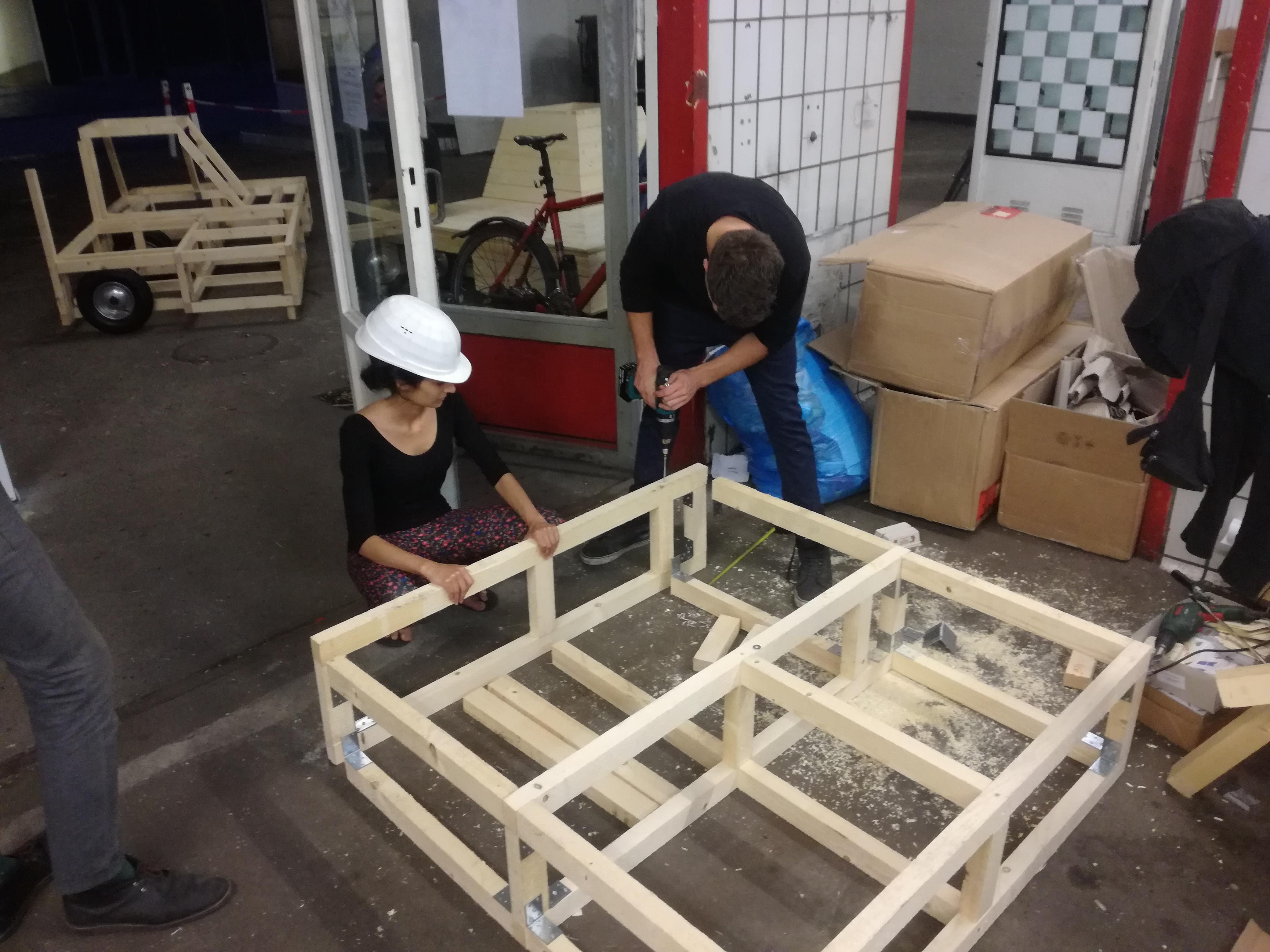
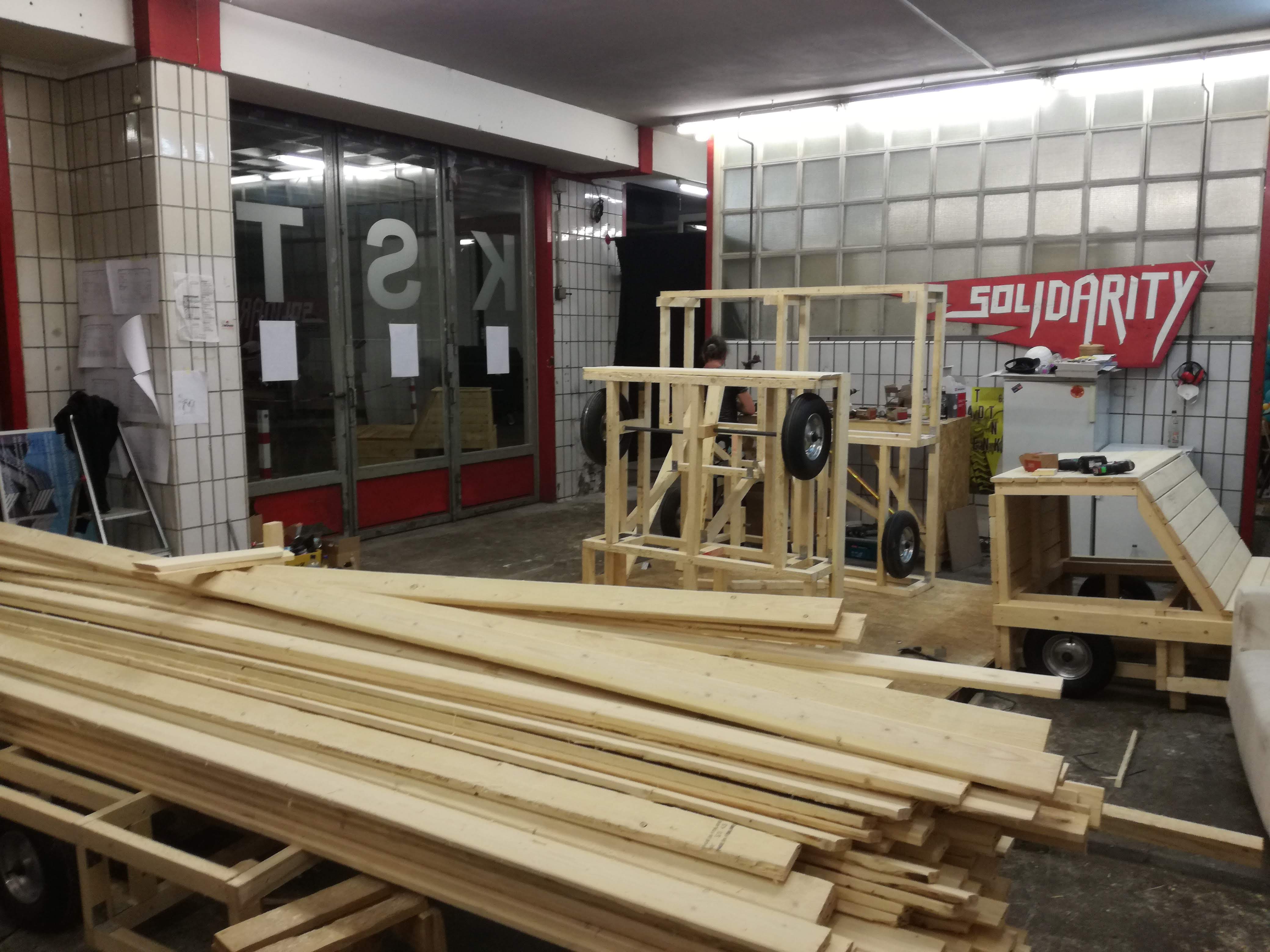
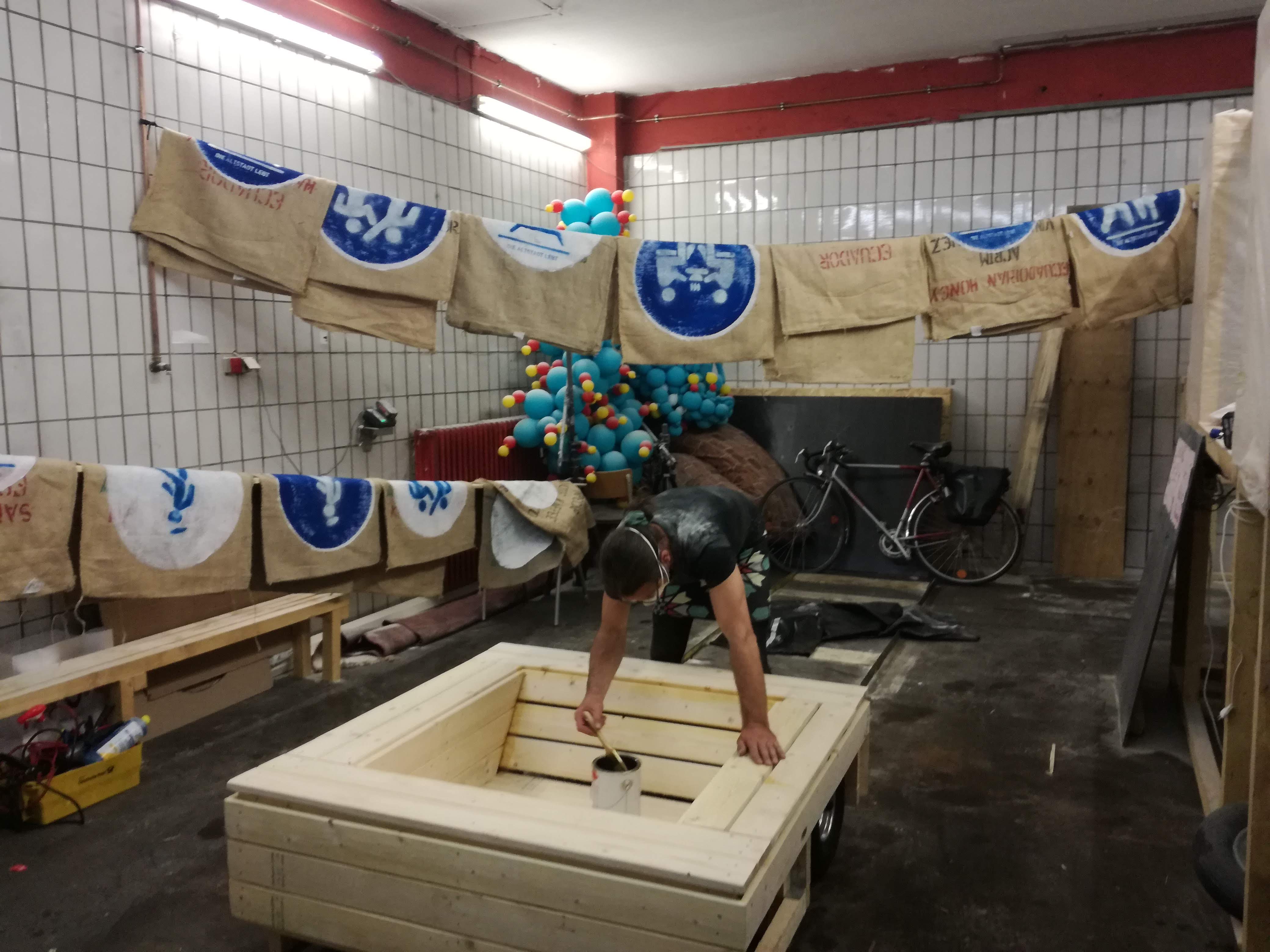
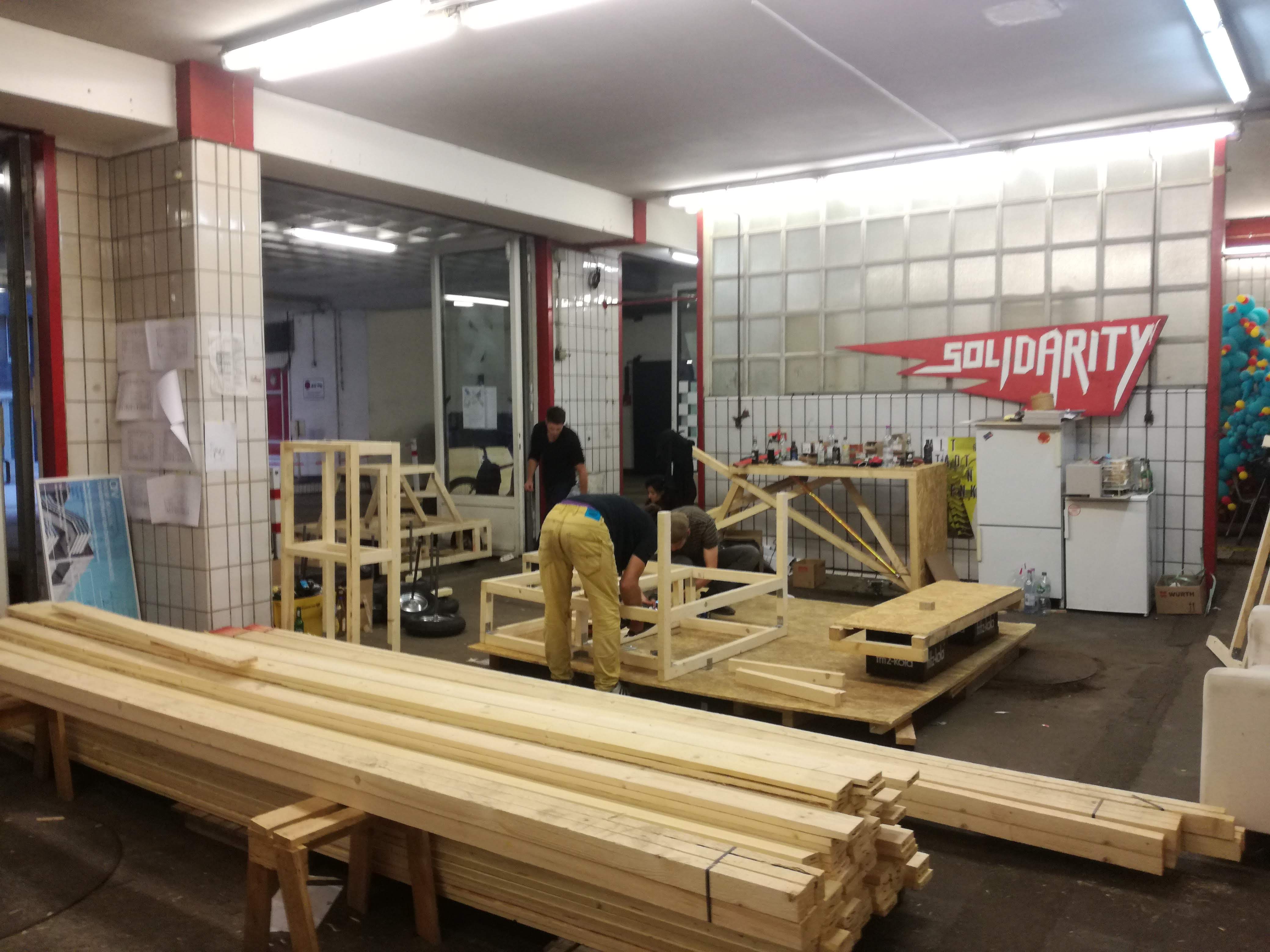
Produced in the former car workshop at Werkstatt Gröninger Hof, the furniture was assembled through hands-on fabrication processes and installed directly within the public street environment. The intervention included seating elements, planted trees, and adaptable configurations that could host concerts, informal meetings, or everyday encounters.
Following the initial project phase, the furniture continued its life in other experimental urban contexts, including the car-free initiative in Altona and later at the Zinnwerke on Hamburg’s Veddel, demonstrating how temporary design-build interventions can circulate across different urban situations and sustain ongoing discussions about the future of shared city space.
Related Links
.jpg)