The Temple of Artifice
(Activating symbolic space through processional light environments)- Place
- Hamburg, Germany
- Client
- [M] Dudeck, HAMBURG MASCHINE — curated by Dirck Möllmann
- Collaborator
- LU’UM collective, St. Katharinen Church Hamburg
- Type
- Performative procession / Light installation / Transmedial performance environment
- Practice Focus
- Spatial ritual, performative environments, and collective transformation
- Materials
- Portable illuminated lightboxes, battery-powered lighting systems, digital hypericon prints, processional elements
The Temple of Artifice was a transmedial artwork by artist [M] Dudeck, commissioned as part of HAMBURG MASCHINE, a two-year programme for art in public space curated by Dirck Möllmann within the Stadtkuratorin Hamburg initiative. Combining neo-liturgical performance, digital media, and exhibition formats, the project explored the role of sacred spaces and mythologies in the information age through Dudeck’s fictional queer sci-fi religion RELIGIONVIRUS.
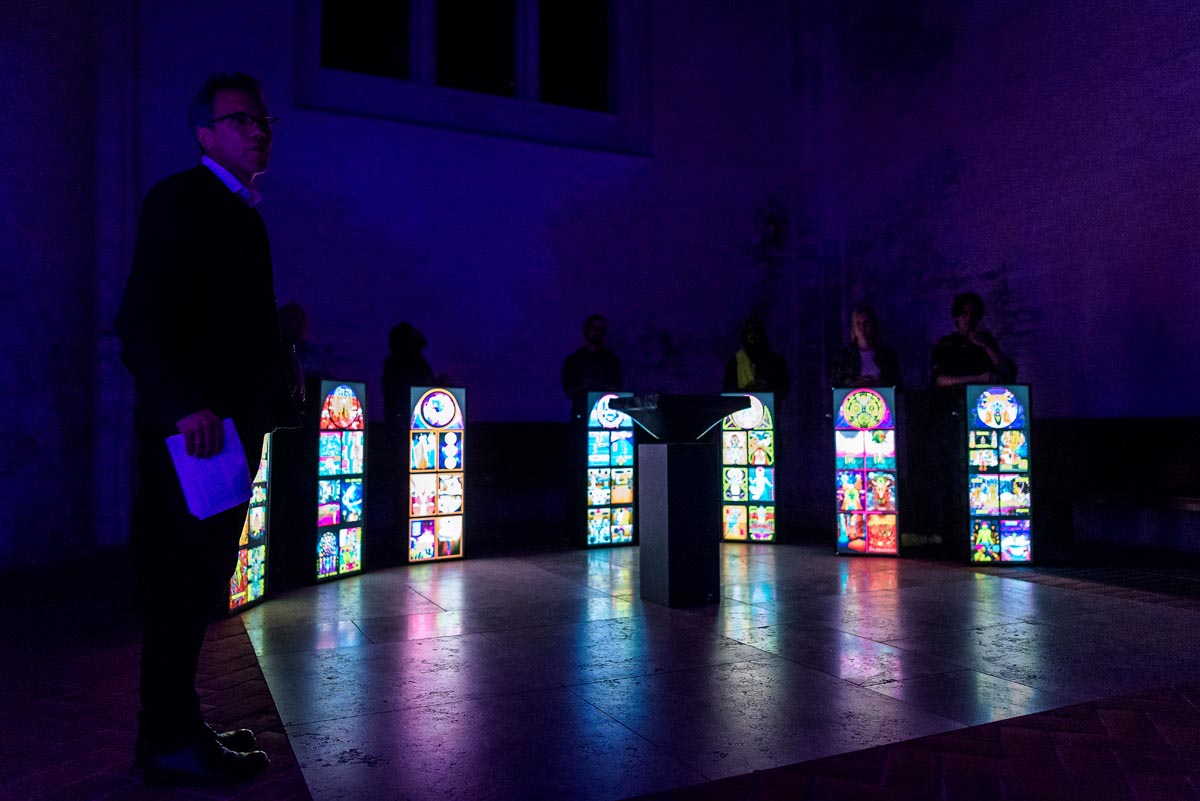
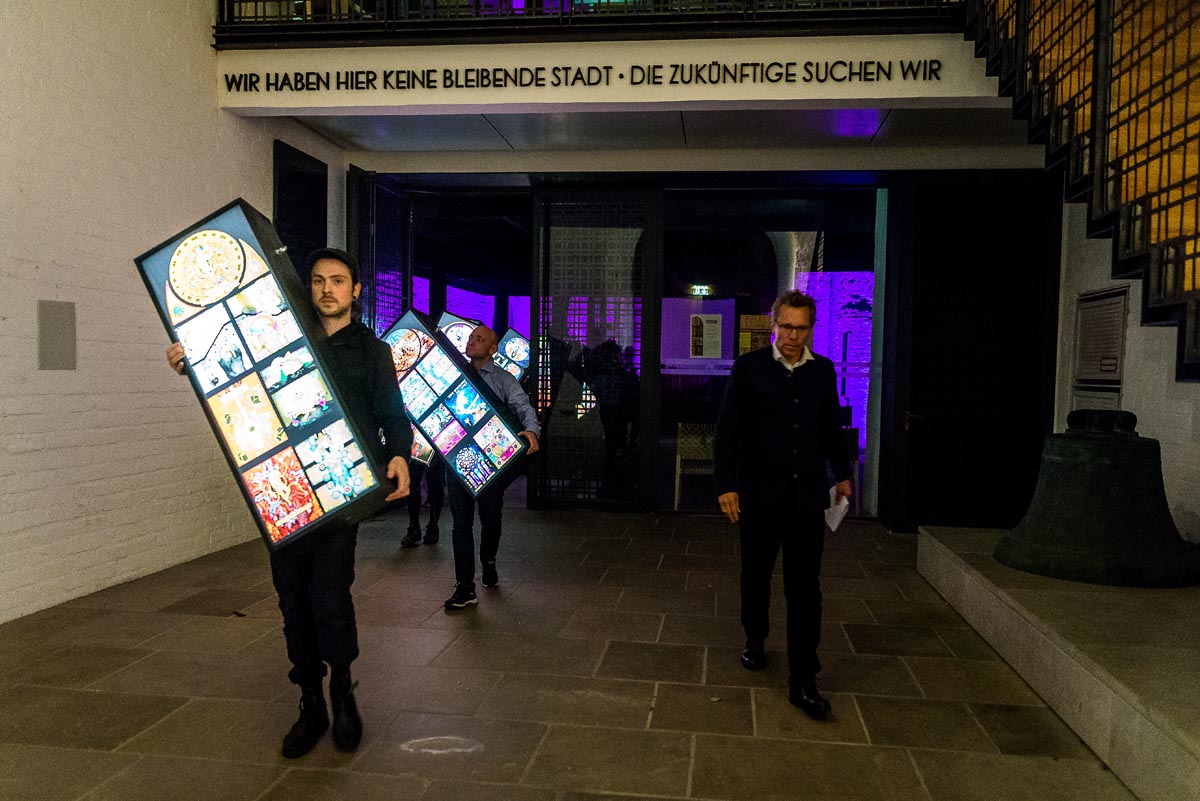
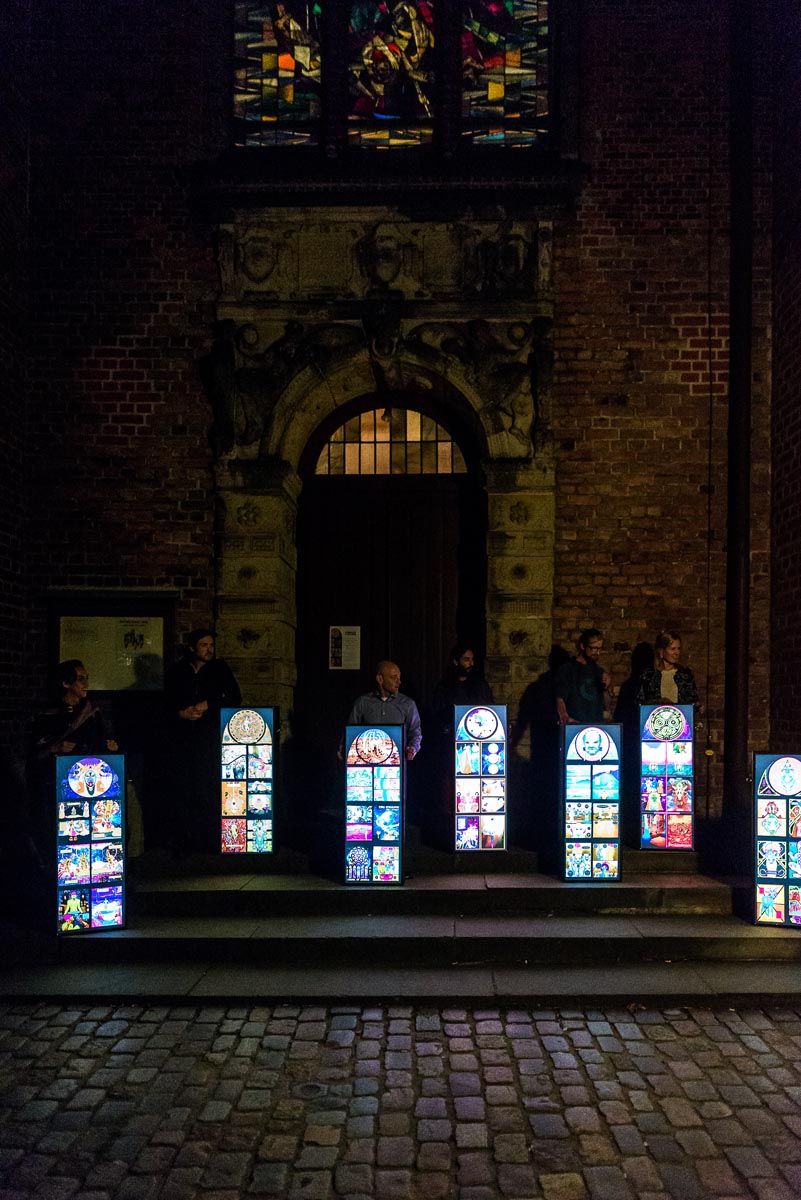
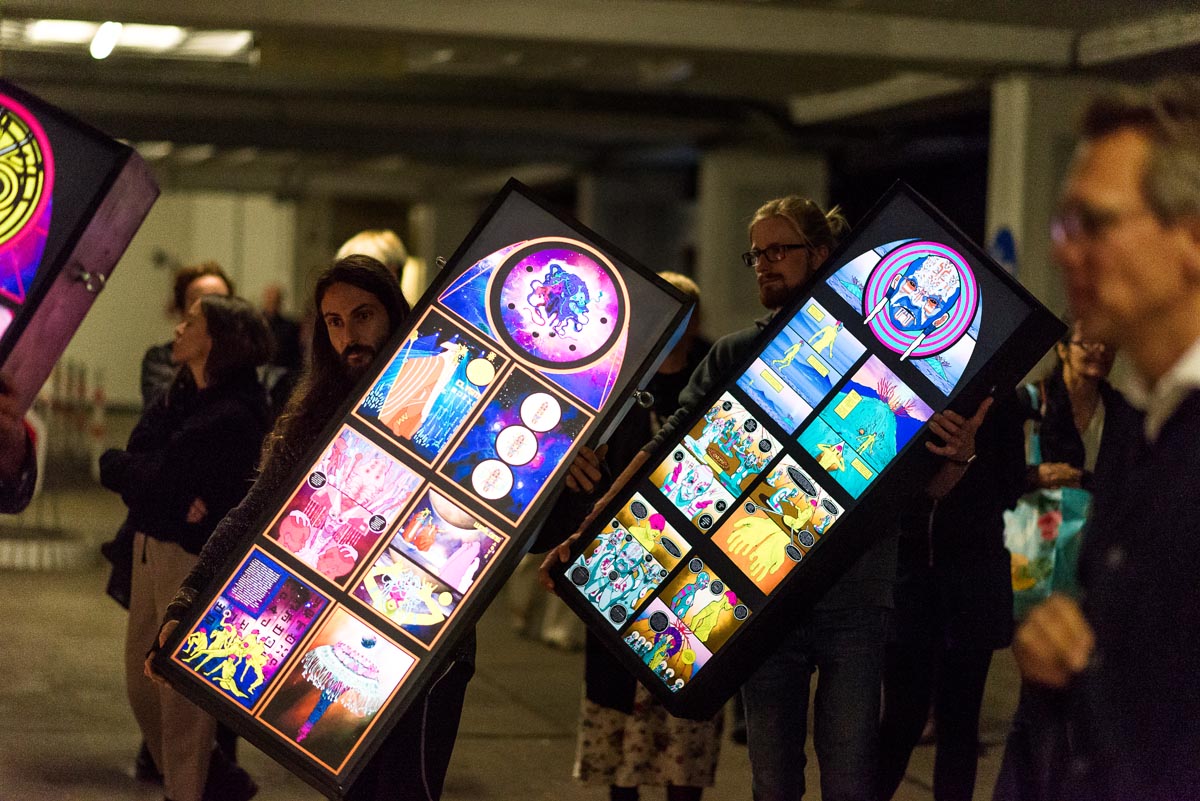
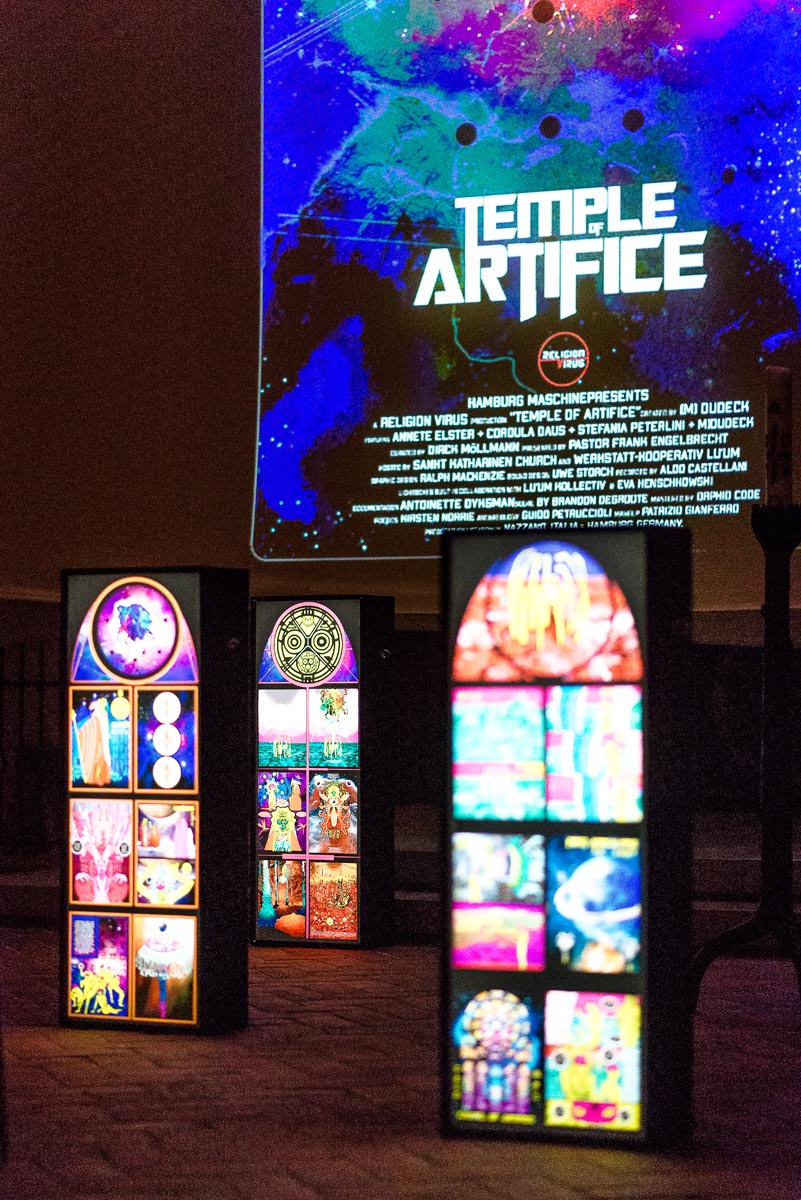
Within this larger artistic framework, Marcelo Javier Acevedo Pardo developed and realised a series of portable illuminated lightboxes displaying the project’s “Hypericons” — digital iconographies from Dudeck’s mythology. Designed as battery-powered and mobile elements, the lightboxes allowed the symbolic imagery of the performance to move beyond the church interior into the public realm.
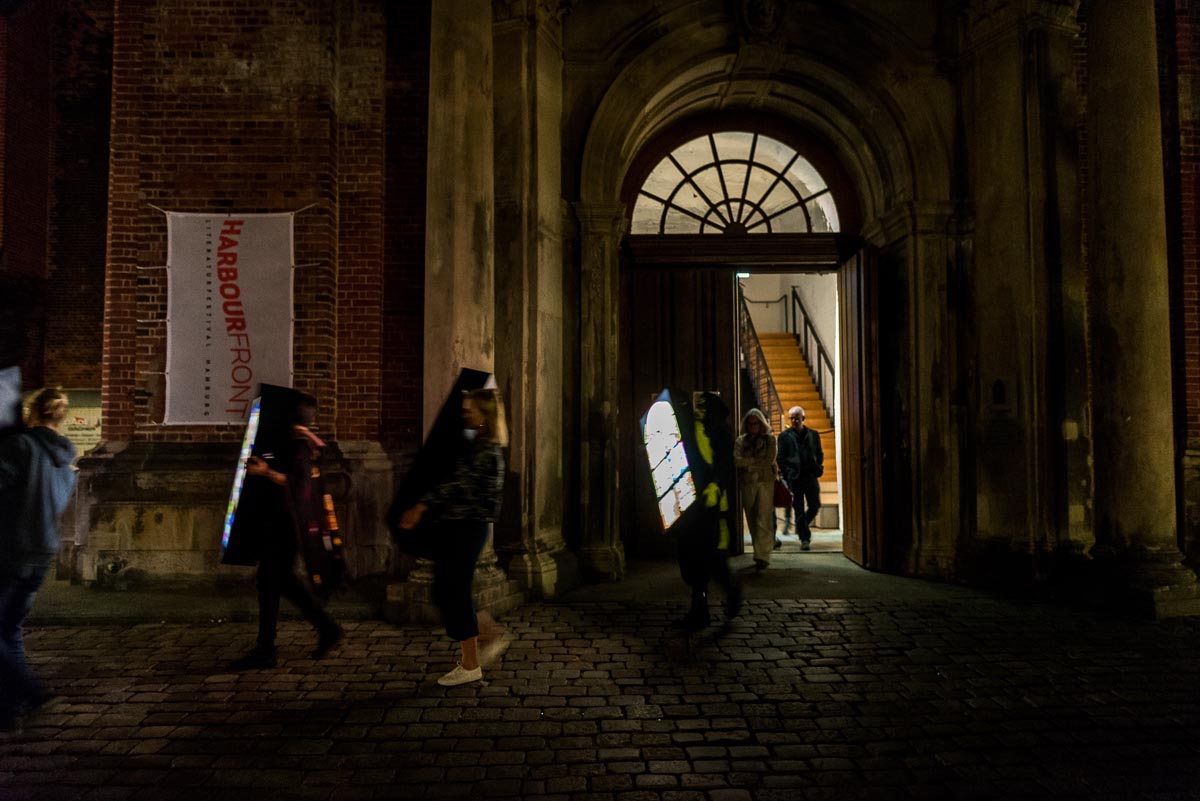
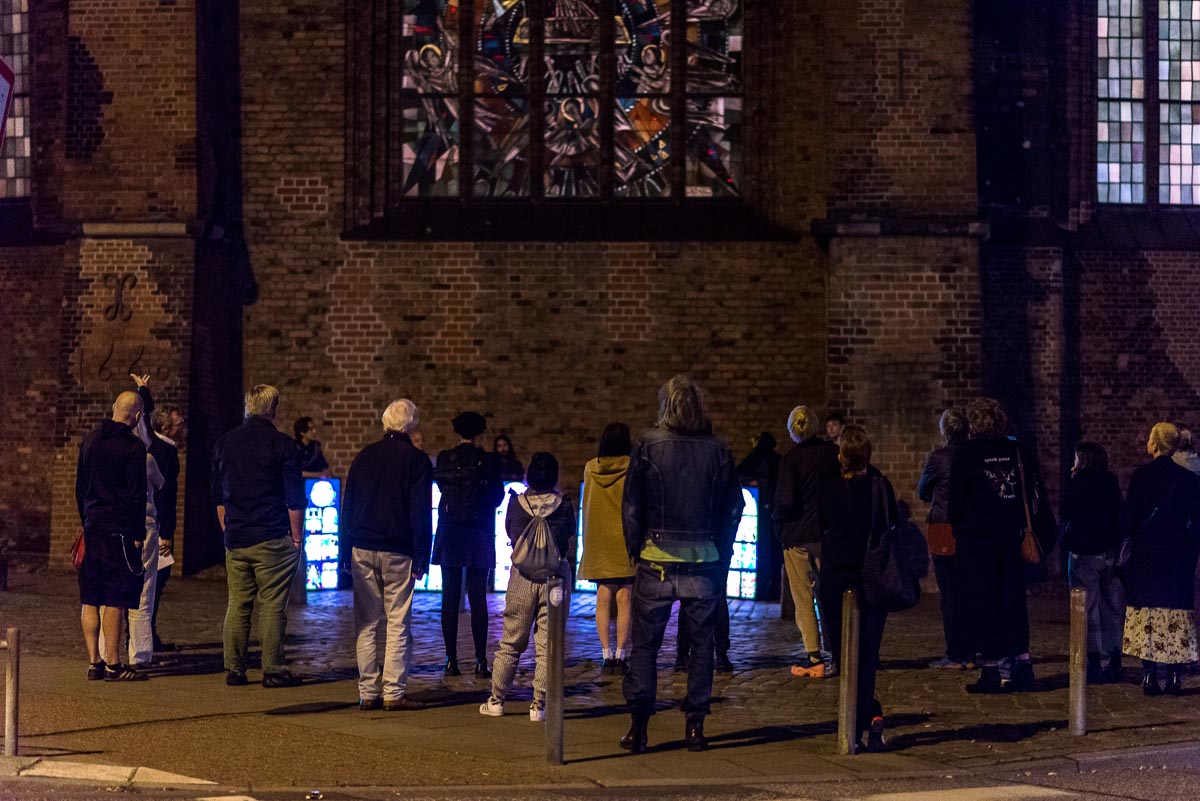
During the performance, the lightboxes formed the visual core of a procession that led participants from St. Katharinen Church through the surrounding streets to the Werkstatt Gröninger Hof, where a temporary exhibition and communal gathering took place. The intervention transformed the nocturnal urban environment into a sequence of temporary “temple” situations: glowing images appeared like contemporary stained-glass windows, creating intimate spatial atmospheres between ritual, theatre, and public encounter.
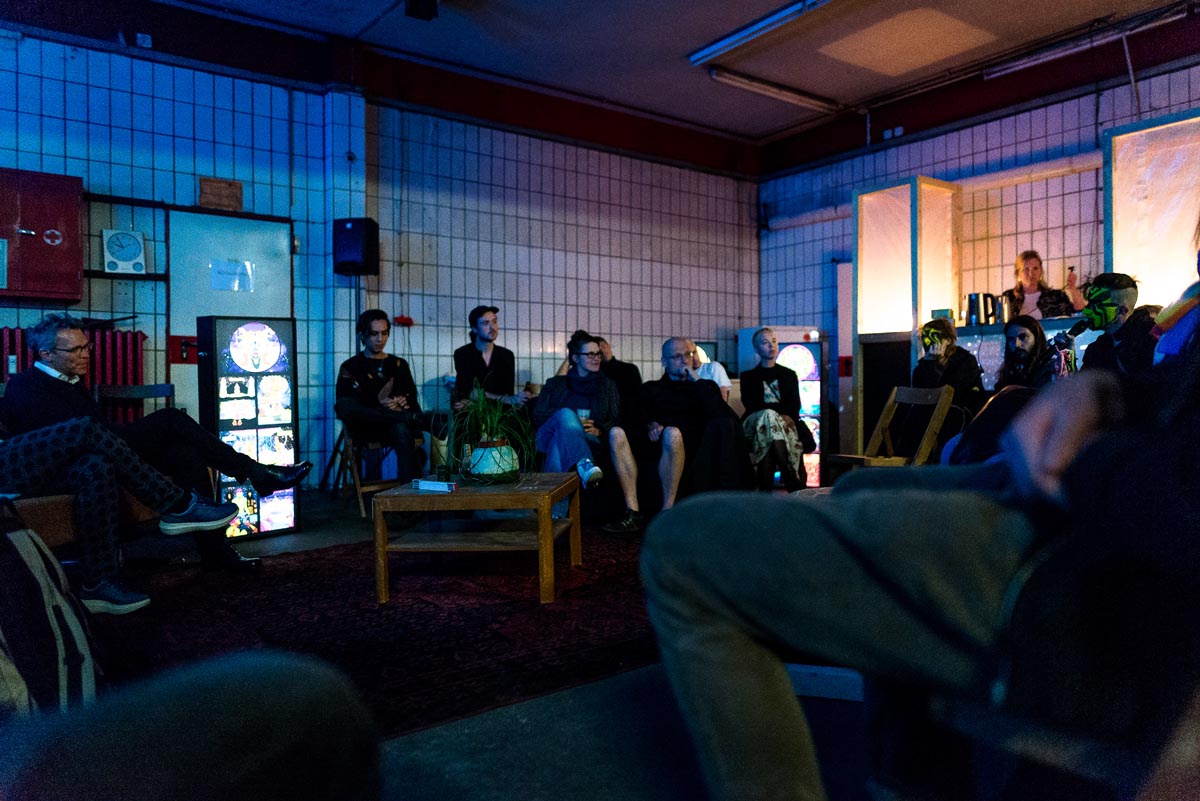
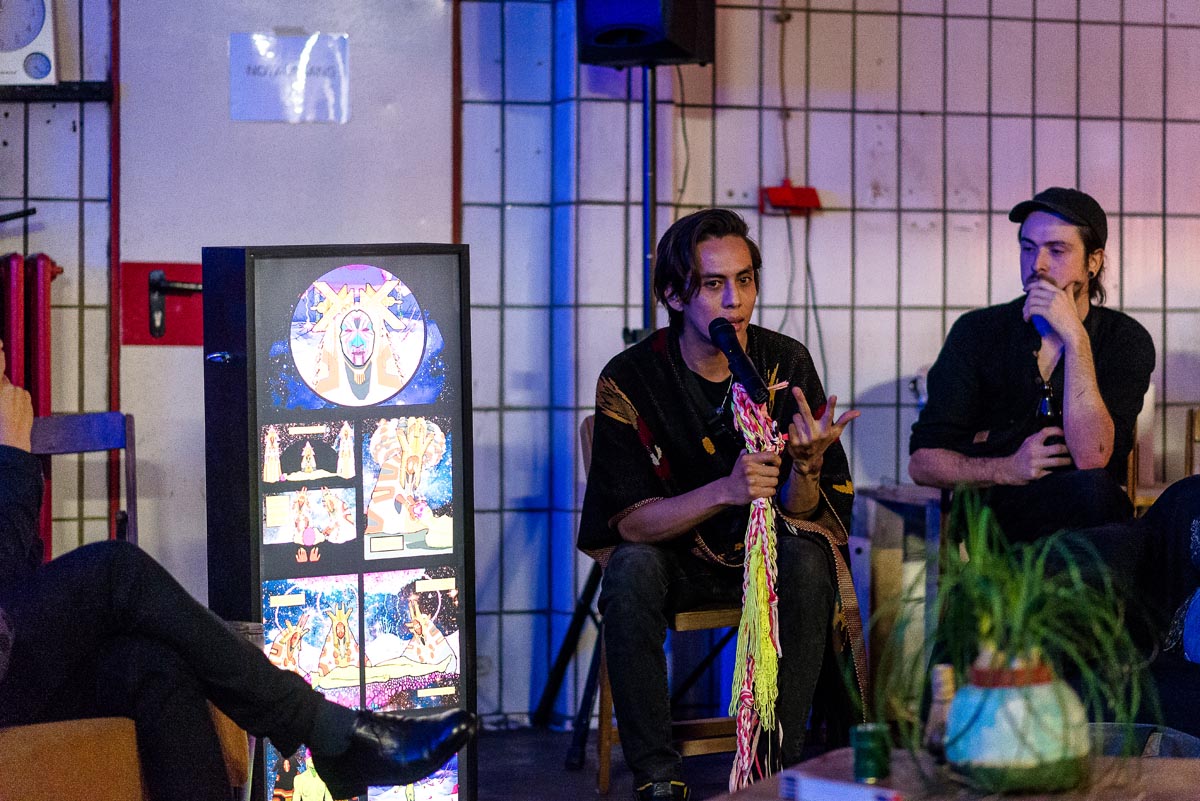
The project concluded with an open exchange between community members, the pastor, the artist, and collaborators — a dialogue that later evolved into the experimental media format Seek Common Ground. Through the development of the lightbox system and the spatial choreography of the procession, the work investigated how symbolic objects and collective movement can temporarily reshape perceptions of public space and create shared moments of reflection.